
Multi-threading and concurrency are important topics for C++ developers to understand, as they can help to improve the performance and responsiveness of your code. Here are some tips for working with multi-threading and concurrency in C++:
Use the C++11 thread library: C++11 introduced a new thread library that makes it easy to create and manage threads. This library provides a high-level interface for working with threads, making it easier to write multi-threaded code.
Understand the basics of threading: Understanding the basics of threading, such as how to create threads, join threads, and synchronize access to shared resources can help you write more robust and efficient multi-threaded code.
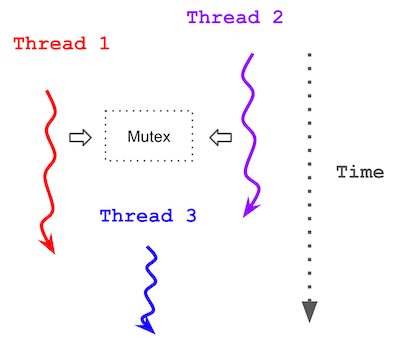
Use locks and mutexes: Locks and mutexes are a basic mechanism for synchronizing access to shared resources. Understanding how to use locks and mutexes correctly can help you avoid race conditions and deadlocks.
Use atomic operations: Atomic operations are a way of accessing shared variables in a thread-safe manner. C++11 provides atomic operations on a variety of basic data types, such as std::atomic<int> and std::atomic<bool>.
Understand the concepts of the memory model: C++11 introduced the concept of the memory model, which defines the behavior of memory accesses in a multi-threaded environment. Understanding the memory model can help you write more efficient and correct multi-threaded code.
Use thread-local storage: Thread-local storage is a way of creating variables that are unique to each thread. Understanding how to use thread-local storage can help you write more efficient and correct multi-threaded code.
Use condition variables: Condition variables are a way of synchronizing the execution of threads based on the state of shared variables. Understanding how to use condition variables can help you write more efficient and correct multi-threaded code.
Use std::async and std::future: C++11 introduced std::async and std::future, which are high-level mechanisms for working with asynchronous tasks. Understanding how to use std::async and std::future can help you write more efficient and correct multi-threaded code.
Use the C++20 executors and parallel algorithms: C++20 introduced new features for concurrency such as Executors and parallel algorithms, that make it easy to write parallel code and also allow you to fine-tune the performance of your program
Use thread-safe libraries: There are many libraries available that provide thread-safe implementations of common data structures and algorithms. Understanding how to use these libraries can help you write more efficient and correct multi-threaded code.


No comments:
Post a Comment