
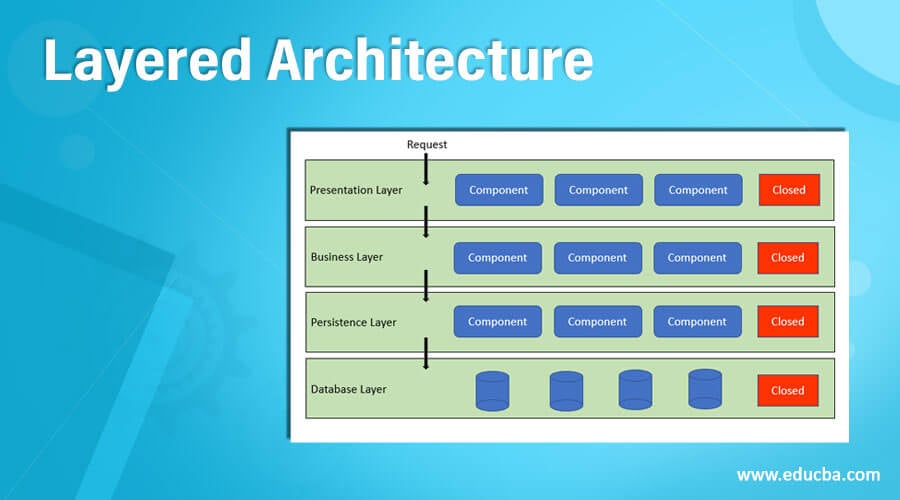
An example of a layered architecture is a three-tier web application. This type of application typically consists of three layers:
Presentation Layer: This layer is responsible for providing the user interface and handling user input. It is usually implemented as a web front-end using technologies such as HTML, CSS, JavaScript, and a web framework such as React or Angular.
Application Layer: This layer is responsible for handling the business logic and coordinating the flow of data between the presentation layer and the data access layer. It is usually implemented using a programming language such as Java or C#, and a framework such as Spring or. NET.
Data Access Layer: This layer is responsible for interacting with the database and performing operations such as inserting, updating, and retrieving data. It is usually implemented using a database management system such as MySQL or PostgreSQL, and an object-relational mapping (ORM) tool such as Hibernate or Entity Framework.
In a layered architecture, each layer communicates with the layer above and below it through a well-defined API. This allows for better separation of concerns and easier testing, as well as more flexibility in changing or updating individual layers without affecting the entire application.
A simple example of a three-tier web application could be a blog. The presentation layer provides the user interface and allows users to view and comment on blog posts. The application layer handles the business logic, such as validating user input and retrieving data from the database. The data access layer communicates with the database to insert, update, and retrieve data.


No comments:
Post a Comment