
Cloud-native architecture
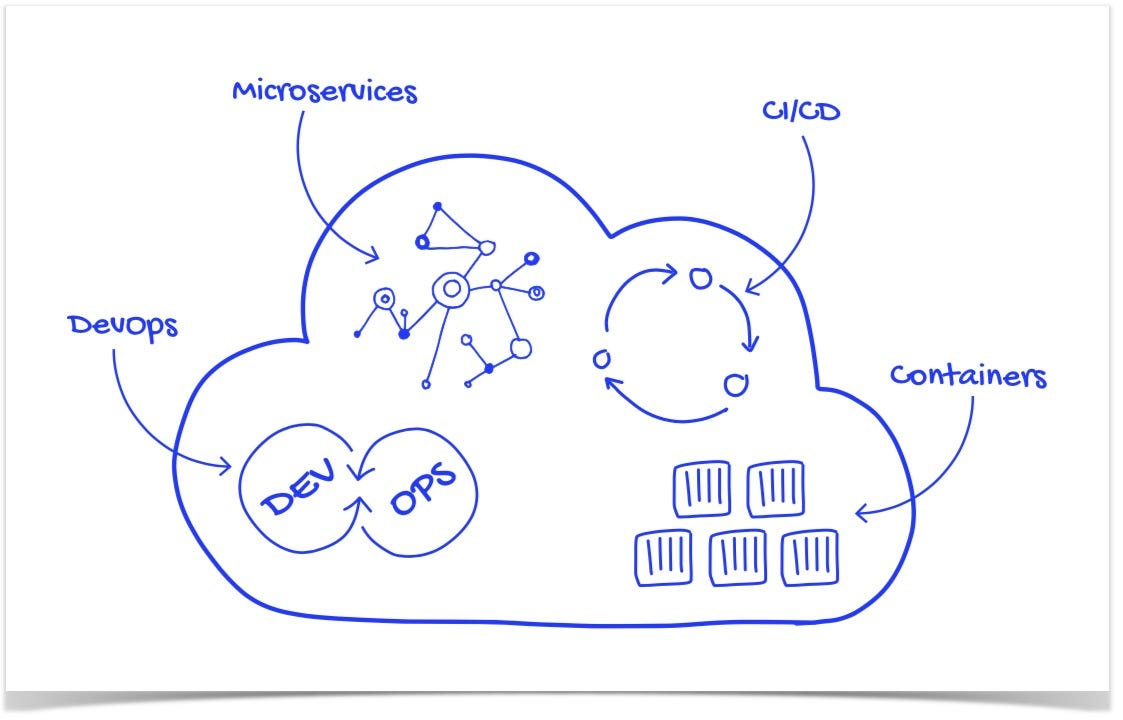
Cloud-native architecture is a way of designing and building applications that are optimized for the cloud. It involves creating software that is scalable, resilient, and secure and is based on microservices architecture, containerization, and dynamic orchestration. Here's an example of cloud-native architecture:
Imagine a company that provides an online shopping platform. They want to create an e-commerce website that can handle large amounts of traffic, be highly available and scalable, and provide a great user experience. They decide to use a cloud-native architecture to achieve these goals.
The architecture consists of several microservices that work together to provide the functionality of the website. For example, there's a product catalog service that manages the list of products, a shopping cart service that tracks the items in the cart, and a checkout service that handles the payment process.
Each microservice is designed to be containerized, meaning that it can run in any cloud environment without modification. The company uses a container orchestration system like Kubernetes to manage and deploy the containers, which can automatically scale the application based on demand.
The microservices communicate with each other through APIs, using a service mesh like Istio to handle the network traffic. This provides features such as load balancing, routing, and security.
To store and manage the data, the company uses cloud-native databases like Amazon Aurora or Google Cloud Spanner, which are designed for cloud environments and can scale horizontally.
The website is designed to be resilient, with each microservice running multiple instances in different availability zones to ensure high availability and fault tolerance. The company uses cloud-native monitoring and logging tools to track performance and troubleshoot any issues.
In summary, a cloud-native architecture for an e-commerce website would consist of microservices that are containerized, communicate through APIs and a service mesh, and are managed by a container orchestration system. The data is stored in cloud-native databases, and the system is designed to be resilient and scalable.


No comments:
Post a Comment