
Agile and Scrum are both software development methodologies that focus on delivering working software quickly and efficiently.
Agile is a broad term that refers to a set of principles and values for software development. Agile methodologies, such as Scrum, prioritize flexibility, customer collaboration, and rapid delivery of working software. Agile development teams aim to deliver working software in short, iterative cycles called sprints.
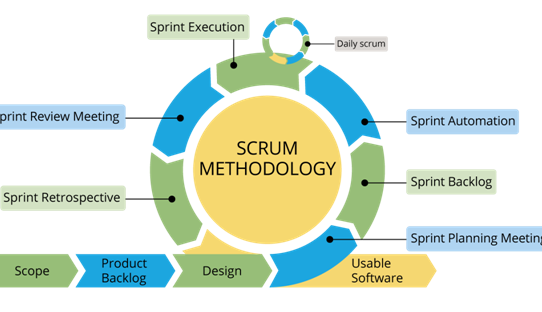
Scrum is one of the most popular Agile methodologies. It is a framework that provides a structure for planning, organizing, and tracking work on a software project. Scrum is based on Agile principles and values and provides a set of roles, events, and artifacts for managing the project.
Scrum defines the following roles:
Product Owner: responsible for maximizing the value of the product and for the product backlog
Scrum Master: responsible for ensuring that the Scrum process is followed
Development Team: responsible for delivering the product
Scrum defines the following events:
Sprint Planning: the team plans the work for the upcoming sprint
Daily Scrum: a daily meeting where the team members share their progress and plan for the next 24 hours
Sprint Review: the team demonstrates the working software at the end of the sprint
Sprint Retrospective: the team reflects on the last sprint and identifies improvements for the next sprint
Scrum defines the following artifacts:
Product Backlog: a prioritized list of features and requirements for the product
Sprint Backlog: the work that the team commits to completing during the sprint
Increment: the working software that is delivered at the end of each sprint
An example of a project using Scrum methodology would be a software development project for a new mobile app for a customer. The development team, product owner, and scrum master would work together to define the requirements and priorities of the project and then work in sprints to deliver working software. The team would hold regular meetings to track progress, identify and solve problems, and plan for the next sprint. The final product would be delivered to the customer at the end of the project, after a series of sprints and reviews


No comments:
Post a Comment