
High speed PCB trace routing best practices
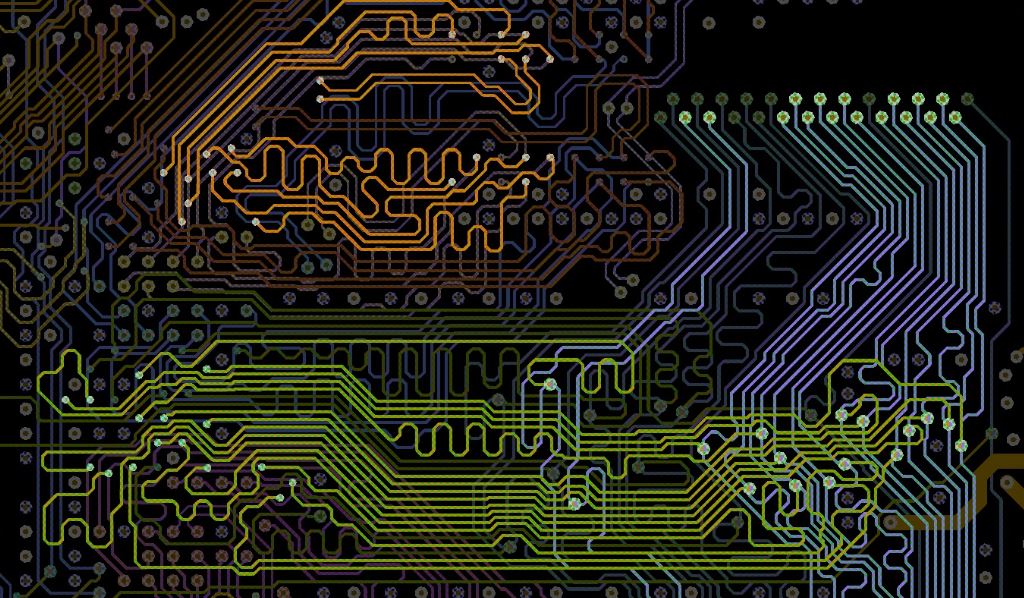
High-speed PCB trace routing is an important aspect of designing and building electronic devices that operate at high speeds. Proper routing can help to reduce electromagnetic interference (EMI) and improve signal integrity. Here are a few best practices for high-speed PCB trace routing:
Use controlled impedance: Controlled impedance is the characteristic impedance of a trace, which should match with the transmission line to prevent signal reflections and improve signal integrity.
Minimize the trace length: Minimizing the trace length will help to reduce the parasitic capacitance and inductance, which can cause signal integrity issues.
Minimize the via count and use via stitching: Vias can introduce unwanted inductance and capacitance to the signal path, minimizing the number of vias, and using the via stitching technique can help to mitigate this issue.
Use differential signaling: Differential signaling can help to reduce the susceptibility to noise and improve signal integrity.
Use a ground plane: A continuous, unbroken ground plane provides a low-impedance return path for high-frequency signals, reducing EMI and improving signal integrity.
Use shielding: Shielding can help to reduce EMI by providing a low-impedance path for electromagnetic interference.
Use ferrite beads: Ferrite beads can be used to suppress high-frequency noise on the power and signal lines.
Avoid sharp corners: Sharp corners can cause signal reflections and increase the loop area, increasing the susceptibility to noise.


No comments:
Post a Comment