Event-Driven Architecture
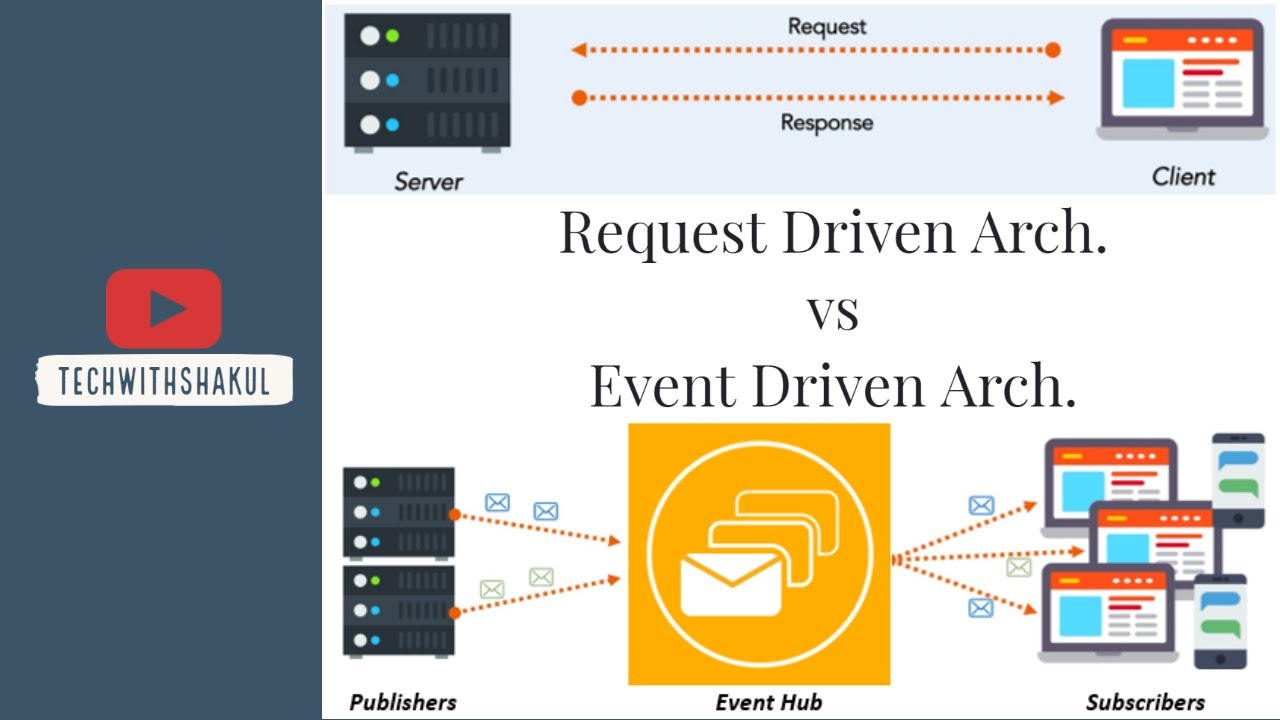
Event-driven systems are a type of software architecture that allows for the efficient handling of asynchronous events. In these systems, a single event can trigger a chain of reactions, leading to the execution of various tasks or the updating of data.
One of the key advantages of event-driven systems is their ability to handle a large number of concurrent events. Because events are processed asynchronously, the system can handle many events at once, without getting bogged down by any single event. This makes event-driven systems well-suited for applications that need to handle a high volume of traffic or data.
Another advantage of event-driven systems is their flexibility. Because events can trigger a variety of actions, the system can easily adapt to changing requirements. For example, if a new feature is added to the application, it can be implemented by simply adding a new event and event handler, rather than modifying the entire system.
Event-driven systems are also highly scalable. Because events are processed independently, adding more resources to the system can easily increase its capacity. This makes event-driven systems well-suited for applications that need to handle a large number of users or a large volume of data.
Event-driven systems are often used in distributed systems, where multiple systems need to communicate and coordinate with each other. By using a publish-subscribe model, where events are published and subscribed to, systems can easily share information and coordinate their actions.
In conclusion, event-driven systems are a powerful type of software architecture that can handle a large number of concurrent events, adapt to changing requirements, and scale easily. They are well-suited for high-traffic applications and distributed systems and are becoming increasingly popular in the world of software development.
Request-Driven Architecture (RDA)
Request-Driven Architecture (RDA) is a design pattern that is used to build scalable and performant applications by processing requests in a consistent and efficient manner. In RDA, incoming requests are processed through a series of stages, each of which performs a specific task, such as authentication, validation, processing, and response generation. The architecture focuses on the request lifecycle, providing a well-defined structure and clear separation of responsibilities, making it easier to maintain and evolve the system.
The stages in a Request-Driven Architecture can be thought of as a pipeline, with each stage being responsible for a specific aspect of processing the request. This allows for a high degree of parallelism, as multiple requests can be processed simultaneously through different stages of the pipeline. Additionally, this architecture can also facilitate modular design, allowing developers to add or modify stages as needed to meet changing requirements.
In short, Request-Driven Architecture provides a clear and scalable approach to processing incoming requests in a consistent and efficient manner, making it an attractive option for building high-performance applications.


No comments:
Post a Comment